Fourth quarter and full year 2025 results
10 February 2026
Good progress on our primary targets to grow cashflow and returns, reduce costs and strengthen the balance sheet is contributing to our goal to build a simpler, stronger and more valuable bp
Results presentation
Chief financial officer Kate Thomson discusses our 4Q25 and full year results in the video below.
Slides and script - 4Q and FY25 financial results and highlights
4Q25 and FY25 results highlights
FY25 results and strategy progress presentation
Interim chief executive officer, Carol Howle; chief financial officer, Kate Thomson; and EVP production & operations, Gordon Birrell, hosted a presentation and question-and-answer session.
2025 at a glance
The key numbers from our fourth quarter and full year 2025 results
4Q and full year results in focus
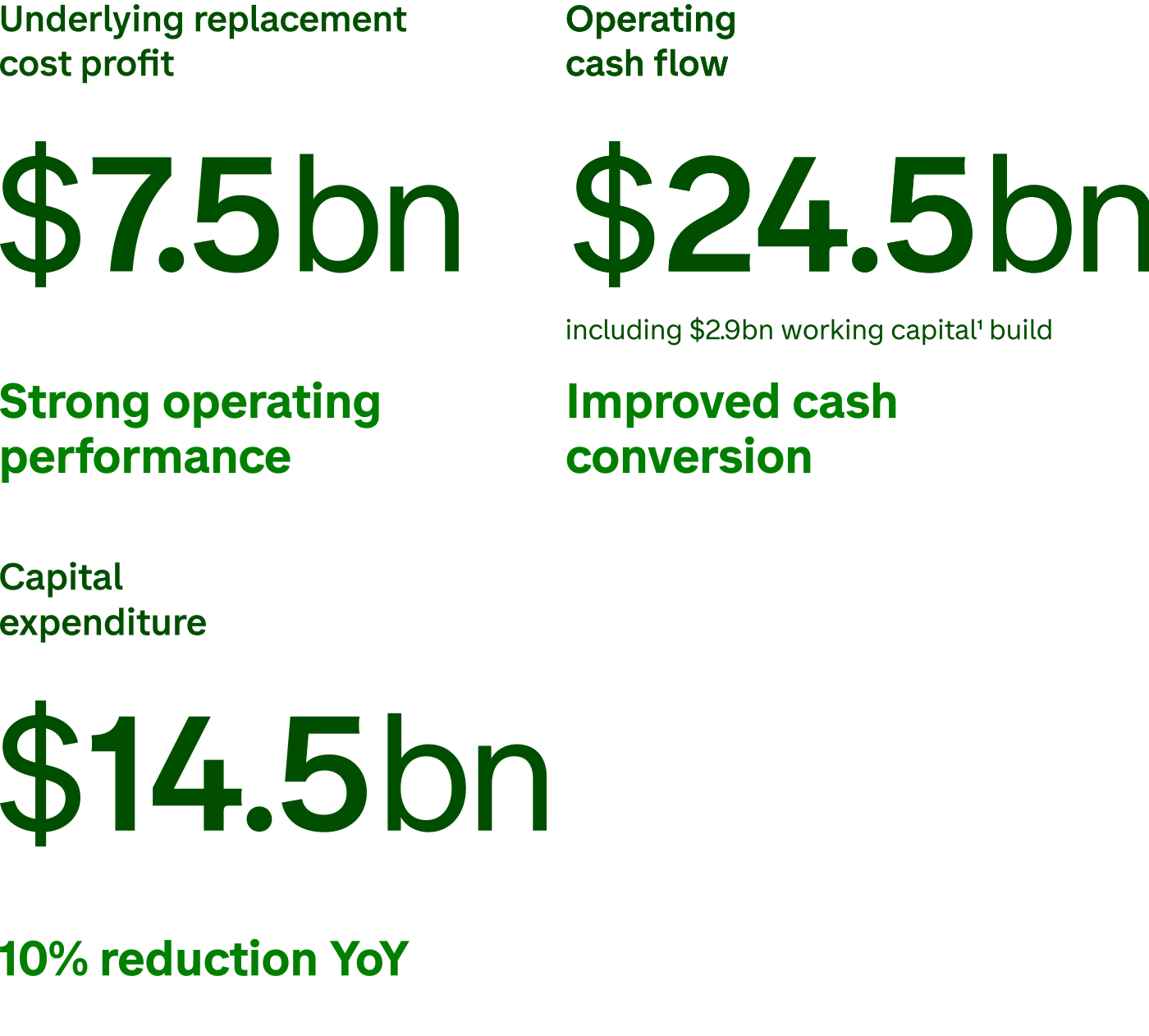
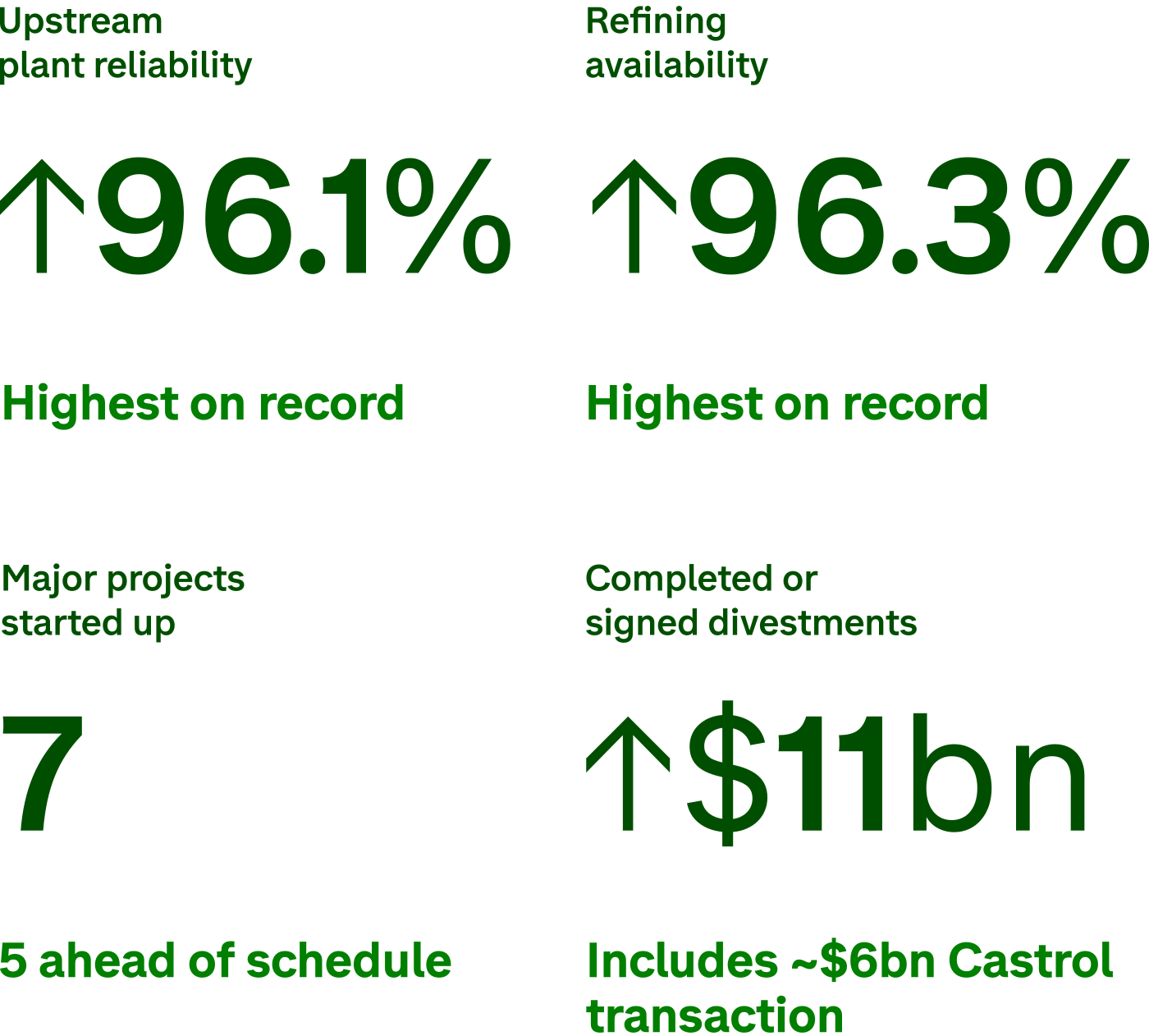
(1) Adjusted for inventory holding losses, fair value accounting effects and other adjusting items.

Highlights
4Q25 underlying replacement cost (RC) profit* $1.5 billion
- Underlying RC profit for the quarter of $1.5 billion, compared with $2.2 billion for the previous quarter. Compared with the third quarter 2025, the underlying result reflects lower upstream realizations, adverse impact of upstream production mix, lower refinery throughputs due to higher turnaround activity and the temporary impact of reduced capacity following an outage at the Whiting refinery and seasonally lower customer volumes, partly offset by lower exploration write-offs. The underlying effective tax rate (ETR)* in the quarter was 43%, compared with 39% for the previous quarter, which reflects changes in the geographical mix of profits.
- Reported loss for the quarter was $3.4 billion, compared with a profit of $1.2 billion for the third quarter 2025. The reported result for the fourth quarter is adjusted for inventory holding loss* of $0.7 billion (net of tax) and a net adverse impact of adjusting items* of $4.3 billion (net of tax) to derive the underlying RC profit. Adjusting items include post-tax net impairments and impairments in equity-accounted entities of around $4 billion, primarily related to our transition businesses in the gas & low carbon energy segment (see Note 3 and page 25 for more information on adjusting items).
Segment results
- Gas & low carbon energy: The RC loss before interest and tax for the fourth quarter 2025 was $2.2 billion, compared with a profit of $1.1 billion for the previous quarter. After adjusting RC loss before interest and tax for a net adverse impact of adjusting items of $3.6 billion as discussed above, the underlying RC profit before interest and tax* for the fourth quarter was $1.4 billion, compared with $1.5 billion in the third quarter 2025. The fourth quarter underlying result before interest and tax reflects lower realizations. The gas marketing and trading result was average.
- Oil production & operations: The RC profit before interest and tax for the fourth quarter 2025 was $1.7 billion, compared with $2.1 billion for the previous quarter. After adjusting RC profit before interest and tax for a net adverse impact of adjusting items of $0.2 billion, the underlying RC profit before interest and tax for the fourth quarter was $2.0 billion, compared with $2.3 billion in the third quarter 2025. The fourth quarter underlying result before interest and tax reflects lower realizations, the impact of production mix, and a lower share of net income of equity-accounted entities, partly offset by lower exploration write-offs.
- Customers & products: The RC profit before interest and tax for the fourth quarter 2025 was $1.4 billion, compared with $1.6 billion for the previous quarter. After adjusting RC profit before interest and tax for a net favourable impact of adjusting items of $0.1 billion, the underlying RC profit before interest and tax (underlying result) for the fourth quarter was $1.3 billion, compared with $1.7 billion in the third quarter 2025. The customers fourth quarter underlying result was lower by $0.3 billion, reflecting seasonally lower volumes and a weaker midstream performance. Fuels margins were broadly flat compared with the third quarter. The products fourth quarter underlying result was lower by $0.1 billion. Stronger realized refining margins were offset by the impacts of lower throughputs as a result of higher turnaround activity and the temporary impact of reduced capacity following an outage at the Whiting refinery. The oil trading contribution was weak.
Operating cash flow* $7.6 billion and net debt* $22.2 billion
- Operating cash flow for the quarter of $7.6 billion includes a $0.9 billion working capital* release (after adjusting inventory holding losses, fair value accounting effects and other adjusting items) and was around $0.2 billion lower than the previous quarter reflecting lower underlying earnings partly offset by lower cash taxes paid. Net debt reduced to $22.2 billion in the fourth quarter primarily driven by the impact of proceeds from divestments of around $3.6 billion partly offset by the $0.6 billion deferred payment for the bp Bunge Bioenergia acquisition.
Our financial frame - accelerating the pace of strengthening the balance sheet
- Our first capital allocation priority is a resilient dividend, which is expected to increase by at least 4% per ordinary share a year(a). For the fourth quarter, bp has announced a dividend per ordinary share of 8.320 cents.
- We are committed to strengthening the balance sheet and continue to target improving our credit metrics within an 'A' grade credit range. We reiterate our primary target of $14 to 18 billion of net debt by end 2027. When considering our capital structure, we also look at other obligations including hybrid bonds, leases and our Gulf of America settlement liabilities. The board has decided to suspend share buybacks, allocate excess cash* to strengthen the balance sheet and accordingly, the guidance for shareholder distributions to be around 30-40% of operating cash flow is now retired.
- Reflecting our continued emphasis on capital efficiency, discipline and returns, we have set our 2026 capital expenditure* budget in the range of $13-13.5 billion. We believe this level of capital expenditure supports progressively growing earnings per ordinary share in the long term.


