Hydrogen
Hydrogen is abundant and it’s key to fuelling heavy industry in a net zero world
Hydrogen at bp
We believe hydrogen will play a vital role in a net zero energy system. When pure hydrogen is used as fuel, it combines with oxygen to produce water, emitting no CO2. If we can decarbonize its production, it becomes a great energy choice for industries that are hard to abate, such as, iron, steel and chemicals. And for heavy transport – trucks, ships and aircraft – which needs fuels that can manage the load while fitting into a small space on board.
bp is putting plans in place today to bring low carbon hydrogen into service where it really counts, close to industrial clusters.
We are focused on high-graded projects in hydrogen and carbon capture as we prioritize five to seven projects for this decade.
Where is bp investing in hydrogen? From local, to regional, to global
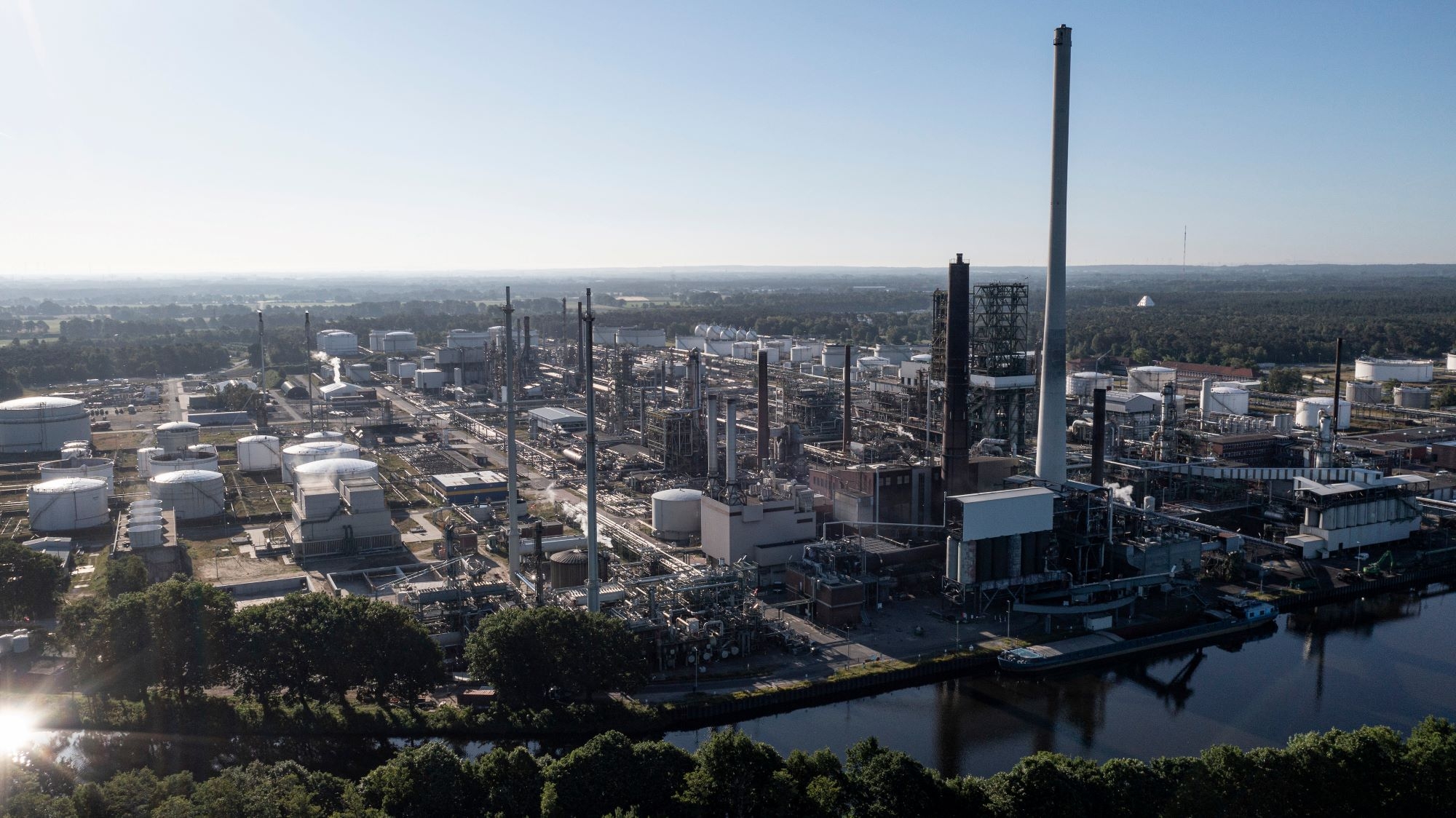
Initially we plan to supply our own refineries – decarbonizing our own operations – as well as selling to local third parties, before ramping up production to turn these into regional hubs. These hubs will provide low carbon energy solutions for customers, particularly in hard-to-abate industrial sectors and heavy transport where hydrogen can have the most impact.
As markets evolve, we plan to invest in building global export hubs for hydrogen, and for hydrogen derivatives, such as ammonia. Here, our experience of moving gas through pipelines, integrating renewables into our portfolio and transporting LNG on water will accelerate our route to market for hydrogen and ammonia.
Find out more about our distinctive supply, trading & shipping capability.

- Green hydrogen, commonly defined as electrolytic low carbon hydrogen, is made by water electrolysis using renewables, such as solar or wind.
- Blue hydrogen, or CCS-enabled low carbon hydrogen, is hydrogen that is extracted from natural gas but the vast majority of CO2 produced during the process is captured and stored permanently underground.
Why is bp investing in both blue and green hydrogen?
We believe a twin-track approach, involving both electrolytic (green) and CCS-enabled (blue) hydrogen, is the best way to help fulfil hydrogen’s potential. This approach aligns with bp’s Net Zero Scenario within our Energy Outlook, which forecasts that virtually all hydrogen will be either electrolytic (around 60%) or CCS-enabled (around 40%) by 2050.
Significant challenges need to be overcome to establish the industry. Electrolysers need to be built and supplied with renewable energy. A pipeline network needs to be established to move the molecule. Technology and infrastructure need to be developed to transport hydrogen by sea. And production needs to scale quickly to bring down the cost of low carbon hydrogen.
CCS-enabled hydrogen represents an important stepping-stone to scaling up the hydrogen economy. That’s because it enables the near-term development of large-scale hydrogen projects that can make an immediate impact on emissions, and at lower cost than a green hydrogen project of a similar scale.
While additional renewable energy and large-scale electrolyser technology is being developed to generate electrolytic hydrogen at scale, low carbon CCS-enabled hydrogen will play an important role in allowing industries to decarbonize. CCS-enabled hydrogen complements the intermittent renewable power that drives electrolytic hydrogen. That’s why we’re calling for policy and financial support for both low carbon hydrogen technologies.
Low carbon hydrogen and CCUS play important roles supporting deep decarbonization pathways
Low carbon hydrogen and CCUS are used to decarbonize hard-to-abate processes and sectors. But their relatively high cost mean that they only reach significant scale in more rapid transition pathways, in which deeper decarbonization options are supported. Even in those types of pathways, much of that expansion occurs in the second half of the outlook.